























Unlocking Seamless Collaboration: How to Use Google Calendars for Groups
- What is Google MDM?
- Android MDM in the Google Workspace
- How Google MDM Works
- Key Benefits of Google Mobile Device Management

- Feature Difference: Basic vs. Advanced Mobile Management
- How to Set up Advanced Google MDM and Enroll Enterprise Devices?
- Wrapping Up
- FAQ
Google Workspace 19.01.2026 


What Is Google MDM and How It Helps Your Business
- What is Google MDM?
- Android MDM in the Google Workspace
- How Google MDM Works
- Key Benefits of Google Mobile Device Management
- Feature Difference: Basic vs. Advanced Mobile Management
- How to Set up Advanced Google MDM and Enroll Enterprise Devices?
- Wrapping Up
- FAQ
Today, the integration of mobile devices has become instrumental in maintaining productivity and ensuring data security. The rise of remote work has heightened the need for effective solutions that go beyond basic device management. This is where Google Endpoint Management (GEM) steps in.
Google Endpoint Management is a comprehensive solution that offers businesses the means to take control of their device ecosystem. Overall, it’s not just about managing devices. It stands as a beacon for securing sensitive data, enforcing policies, and optimizing the use of mobile devices across the organization.
As we explore Google Workspace MDM, envision it as a strategic asset that strikes the right balance between security and user convenience. Let’s discover how it can become the cornerstone of your organization’s digital strategy.
What is Google MDM?
Google MDM (Google Mobile Device Management) is a part of Google Workspace designed to arm businesses with efficient control and security over their mobile devices. By offering a centralized dashboard and intuitive controls, it removes the complexities of device administration, allowing businesses to focus on their core operations.
For instance, Google MDM is a savior when a corporation gives more and more Android phones to its remote workers. The IT administrator then uses it to enroll every device automatically when the worker logs in through their corporate account. The system immediately implements security policies, such as screen lock, encryption, and restrictions on permitted business apps.
This way, while Google Workspace MDM offers basic capabilities, Google Endpoint Management stands out with its comprehensive approach. From startups to large enterprises, it presents a suite of benefits. Its scalability caters to the unique needs of businesses, ensuring a tailored approach to device management.
One of the standout features of Google Workspace Mobile Device Management is compatibility with diverse devices and operating systems. Whether it’s Android, iOS, or other platforms, it smoothly integrates. However, let’s break down first how it works.
Android MDM in the Google Workspace
With Android MDM, businesses control all of the Android devices that their employees use for work from one place. The same as with other systems, it lets you enforce security rules, control apps, set up device settings, and keep company data safe on both company-owned and personal devices.
As a result, businesses can safely manage numerous Android devices while keeping the user experience smooth. The features like Android Device Policy, work profiles, and zero-touch enrollment only help with that.
How Google MDM Works
As Google MDM connects employee devices to your organization’s Google Workspace environment, administrators can manage security policies from a centralized cloud-based console. Administrators can enroll devices in bulk, configure settings, and customize policies to align with the company’s security protocols using zero-touch enrollment.
For personal devices, on the contrary, users can easily enroll their devices by accessing their corporate accounts with configured Google Workspace Device Management policies. This process ensures that the device complies with the organization’s security policies while maintaining the user’s privacy.
In a nutshell, this service offers an array of management capabilities that enable administrators to ensure device security and accelerate operations as follows:
- Policy Enforcement. Administrators can create and enforce policies that dictate device usage, ensuring compliance with security standards. For instance, they can enforce encryption and passcode requirements, as well as restrict certain device functionalities.
- Remote Work. The platform allows for remote actions such as wiping or locking devices in case of loss or theft. This ensures that sensitive company data remains secure even if the device is compromised.
- Application Deployment. Administrators can manage and deploy applications across devices, ensuring that employees have access to the necessary tools while maintaining control over app permissions and updates.
Consider a scenario where an employee loses their device. With this service, administrators can remotely wipe the device’s data, preventing unauthorized access to sensitive information. Additionally, this is not a single benefit of the Google MDM solution.
Key Benefits of Google Mobile Device Management
Google MDM brings a host of benefits to businesses, revolutionizing how they handle device security, productivity, and application control. Let’s get them listed.
Enhanced Security Measures
This service ensures that sensitive company data remains protected by offering solid data encryption. This means that even if a device falls into the wrong hands, the data stored on it remains unreadable and secure.
As we said above, in case of device loss or theft, administrators can remotely wipe or lock the device. This immediate action helps prevent unauthorized access to company data, maintaining the integrity of sensitive information.
Improved Productivity Through Improved Device Management
With improved device administration, employees can focus on their tasks without worrying about the complexities of device management. Google MDM enables automatic setup of devices according to your business policies, ensuring that settings, security restrictions, and app access are the same from day one.
Furthermore, centralized capabilities enable quick troubleshooting and issue resolution. This minimizes downtime and ensures that employees can stay productive without interruptions caused by device-related issues.
As a result, with Google MDM, companies make the digital workplace more efficient. They reduce manual setup, downtime, and frequent device-related problems. This keeps employees productive, connected, and supported, whether they work in the office or from home.
Centralized Application Deployment and Updates
Administrators can easily manage and deploy applications across devices, ensuring that employees have access to the necessary tools. This centralized approach simplifies the deployment process and provides uniformity across all application versions in the organization.
Plus, Google Workspace device management enables centralized app updates. This ensures that all devices receive timely updates, patches, and new features, reducing security risks and maintaining optimal performance.
Feature Difference: Basic vs. Advanced Mobile Management
Google Endpoint Management has two levels: Basic and Advanced. Thus, these levels cover the needs of businesses of all sizes. In particular, Basic Mobile Management gives you the baseline tools you need to secure and manage user devices. Meanwhile, Advanced Mobile Management offers extended security features, better visibility, and more control over administration, even for highly regulated settings.
This way, businesses can choose the correct level of management for their operational and compliance needs if they know the differences. Wondering about the distinctions between the basic and advanced modes for Google Workspace mobile device management? Let’s break down the key features to help you make an informed choice based on your business needs.
| Features | Basic | Advanced |
| Security Settings | Basic passcode enforcement, such as screen lock and passwordDevice rules for security alerts | Advanced passcode enforcement, including screen lock, PIN, strong passwordSet password lifespan, block expired passwords, wipe device if the password is incorrectDevice rules for security alertsPolicies to control camera usage and data encryptionAndroid work profileNetwork management |
| Device Control | Endpoint verificationBlock devicesRemote wipe account | Block and approve devicesRemote wipe account and deviceZero-touch enrollmentBulk enroll company-owned desktop and iOS devices |
| App Control | Downloadable app list for Android | Downloadable app list for Android and iOSApp setting configuration, such as runtime permissions, force install, auto-update |
| Device Requirement | Android 2.2+ iOS 12.0+ iPad OS 13.1+ | Android 6.0+ iOS 12.0+ iPad OS 13.1+ |
To sum up, if your business demands higher control, especially when using company-owned devices, the advanced version is tailored for you. It offers multiple features that go beyond basic features, providing enhanced security and more reliable control over your device ecosystem.
Google provides four pricing plans starting from $6 per user per month for Workspace users. It’s important to note that features of advanced features are exclusive to Business and Enterprise plans, and not available in Starter and Standard plans.
Choosing the Right Version for Your Business
Should you doubt which plan is right for your business, let’s review some considerations.
- Basic Mode. Ideal for businesses with lower security needs and a focus on online teamwork. It meets most general demands efficiently.
- Advanced Mode. Tailored for businesses seeking higher control, especially when utilizing company-owned devices. It provides an extensive set of features for enhanced security and control.
Choose the option that aligns perfectly with your business goals and security requirements.
How to Set up Advanced Google MDM and Enroll Enterprise Devices?
Applying Google Workspace mobile device control can significantly boost your team’s collaboration and reduce the risk of data breaches. It’s essential to note that this Google MDM provider supports a wide array of company-owned devices, including mobile phones, laptops, and desktops.
While the basic mode is a default setting that doesn’t require additional tool installations, this guide will walk you through the process of setting up the advanced mode, ensuring heightened control and security. Let’s dive in.
Step 1: Create an Admin Account to Log in
Head to the official Google Admin website. If you’re new to this, click “Get started” to create an account. Provide necessary details like your brand name, employee number, region, email address, domain, company address, and credit card info.
Once your account is set up, log in to the Admin console. You’ll find a feature navigation bar on the left panel, offering access to essential functions like device enrollment, setting configurations, app management, and network controls.
Step 2: Turn on Advanced Mobile Management
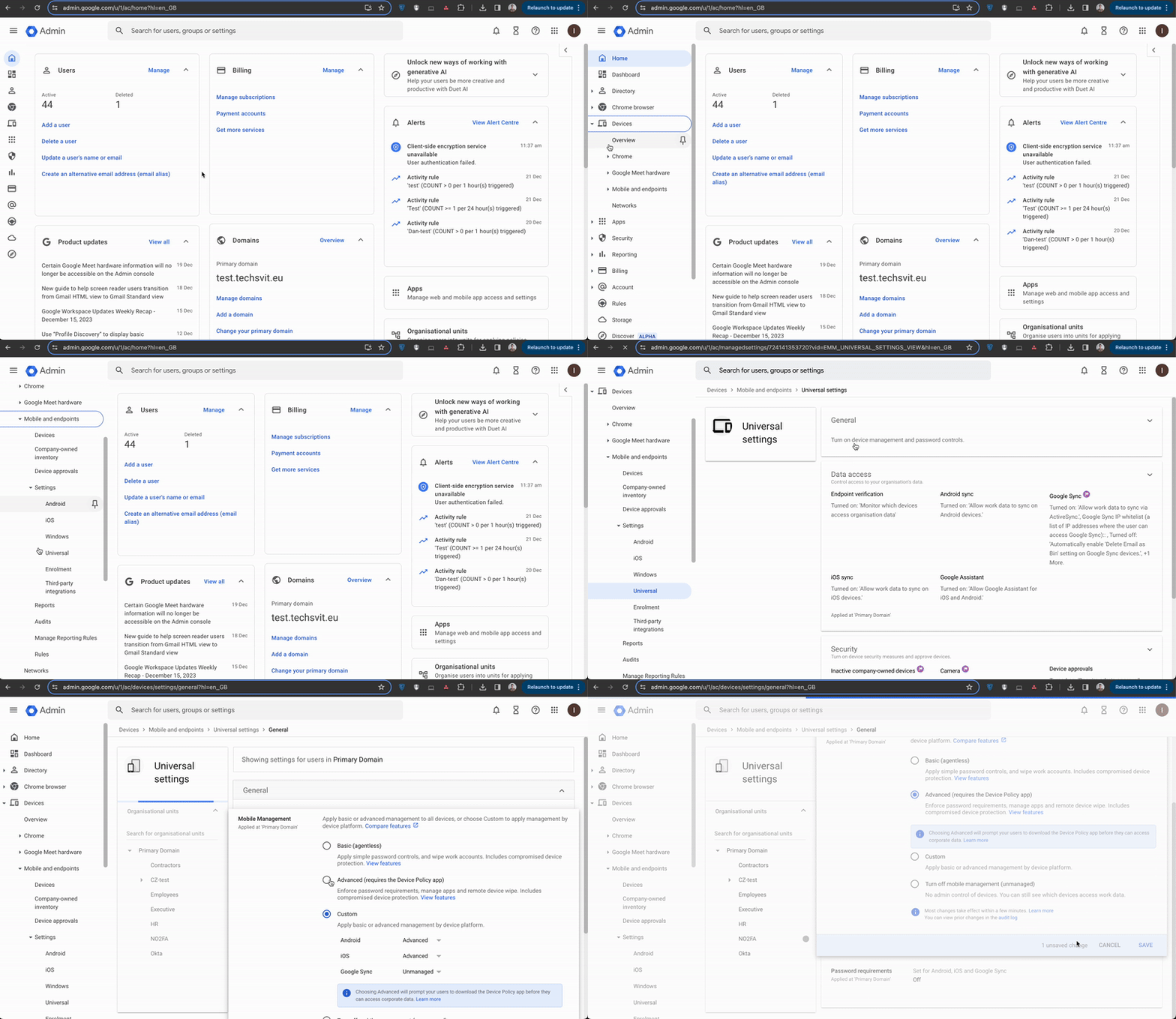
After accessing the admin console, navigate to
- Devices >
- Mobile & endpoints >
- Settings >
- Universal settings >
- General >
- Mobile management
- Select “Advanced” to activate advanced mobile management features.
When you turn on workspace, it adds better security controls and more device management features. This step is crucial for businesses that need more transparency, tougher security rules, or to follow industry rules.
Step 3: Enroll Company-Owned Devices
For personal or BYOD (Bring Your Own Device) situations, you may need to install Android Device Policy. After that, just log in to your account and your corporate policies will be automatically enrolled.
This method ensures that both company-owned and personal devices are set up in the same way and are protected, while separating business and personal data. It also accelerates the onboarding process helping IT staff to deal with multiple devices at once.
Step 4: Configure Settings for Android Mobile Devices
To fine-tune settings for Android devices, proceed to Devices > Mobile & endpoints > Settings > Android. You’ll find options for:
- General settings: Auto wipe, CTS Compliance, Application auditing, and User device wipe.
- Work profile: Password settings.
- Apps and data sharing: Screen capture, Location sharing, Runtime permissions, USB file transfer, etc.
- Networks: Wi-Fi, VPN access, Tethering, Mobile networks, Bluetooth, etc.
- Device features: Trusted credentials, Microphone, Speaker, Factory reset, Factory reset protection, etc.
- Users and accounts: Add and remove users as needed.
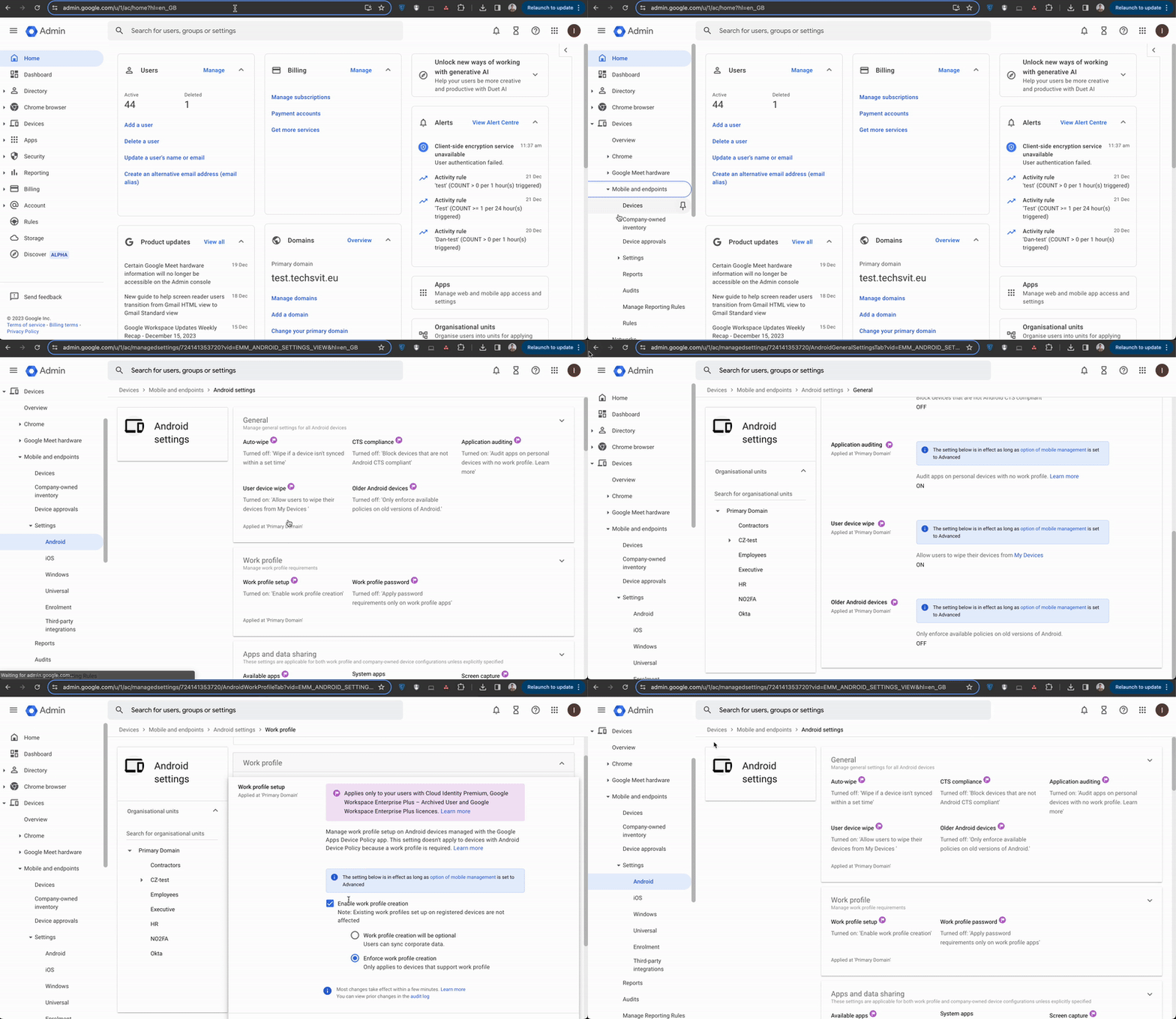
This setup establishes a strong foundation for efficient device management and ensures that devices are secured according to the organization’s standards and policies. It propels administrative tasks while enhancing security measures across the device ecosystem.
Ready to take your business to the next level? Explore the plans:
Wrapping Up
As businesses continue to evolve and rely more on mobile devices, the need for solid management and security solutions becomes paramount. In essence, integrating Google Workspace MDM into your business operations is an investment in efficiency, security, and scalability. With Google endpoint management, the path to sustained success becomes clearer, allowing your business to thrive.
Cloudfresh skilled experts have developed Google Workspace consultancy packages tailored to propel your workplace transformation. We specialize in smooth setup, comprehensive support, and customized training to boost your business operations.
Among our top services is Google Workspace Mobile Device Management, which helps enterprises with advanced control over phones, laptops, and desktops. We aim to strengthen your devices’ security and ensure efficient organizational management.
Need a Google MDM consultation? Schedule a call now!
FAQ
01 What is Google MDM?
02 What is Google Endpoint Management?
03 How to remove a device from Google Device Manager?
04 What is the price for Google MDM?

Get in touch with Сloudfresh