

























What Is Google MDM and How It Helps Your Business
- How Unsanctioned Artificial Intelligence Plays Out in the Real World
- Human Capital Is the Way
- Enterprise AI Security: Alternatives to Consumer Tools

- What Is AI Security? A Safe Starting Point
Google Workspace 02.06.2026 
Enterprise AI Security: How to Regain Control
- How Unsanctioned Artificial Intelligence Plays Out in the Real World
- Human Capital Is the Way
- Enterprise AI Security: Alternatives to Consumer Tools
- What Is AI Security? A Safe Starting Point
When employees turn to unsanctioned artificial intelligence tools, also known as Shadow AI, they rarely think of themselves as breaking cybersecurity rules. Most are just trying to finish their work faster.
They paste a snippet of code into a chatbot. Or ask an assistant to summarize a meeting. Or upload a spreadsheet to get help making sense of it.
But every one of those actions can quietly expose sensitive company data.
Without proper governance, these tools become a hidden gateway for intellectual property, financial data, and confidential communications to leave the organization.
Once that data enters an external system, the control is lost. Today, we talk about how to get it back with enterprise AI security.
How Unsanctioned Artificial Intelligence Plays Out in the Real World
One of the most widely discussed incidents happened in March 2023 at Samsung.
At the time, the company had temporarily lifted its ban on the use of ChatGPT. Within weeks, several employees unintentionally leaked highly confidential information.
In one case, an engineer pasted proprietary source code into the chatbot to diagnose an error.
Another employee uploaded internal code, trying to improve its performance.
A third employee submitted the transcript of a confidential corporate meeting so the artificial intelligence could generate summary notes.
Each of those prompts had sensitive information. And because many public systems keep user input by default, the data became part of the platform’s internal dataset.
The result was alarming. Samsung’s proprietary information—that is, trade secrets developed over years of research—was effectively handed over to an external system outside the company’s control.
Incidents like this show how quickly routine workplace habits can turn into major security exposures.
The problem goes beyond individual mistakes. It also extends to the platforms themselves.
Organizations that rely on consumer AI tools inherit the risks of those tools’ ecosystems. Security flaws, design oversights, and poorly understood privacy settings can expose huge amounts of data.
Another major example emerged in 2025 when a privacy failure in ChatGPT revealed just how fragile these systems can be.
The platform included a “Share” feature that allowed users to generate links to their conversations. A toggle labeled “Make this chat discoverable” determined whether those conversations could appear in public search results.
The design seemed simple. In practice, it caused confusion.
Many users believed the shared links were private. They were not.
More than 4,500 conversations were eventually indexed by search engines. Anyone could find them with a simple search.
The information had not been stolen by hackers. It was simply exposed by a misunderstood interface.
That same year, another popular AI platform called DeepSeek left one of its databases out in the open. While it’s still unknown whether potential hackers had enough time to take advantage, they could’ve gotten away with more than 1 million lines of logs.
These included chat histories stored in plain text, API keys, and even backend data. No authentication whatsoever was needed to extract it all—just some entry-level knowledge of SQL.
Fast-forward to 2026, and researchers from Oasis Security found a critical vulnerability chain in OpenClaw that let any website a developer visited to silently take full control of the AI agent with zero user interaction required.
Because the agent had unrestricted local access and lacked boundaries, a hijacked OpenClaw agent could easily start lateral movement and massive data exfiltration.
The OpenClaw incident is the ultimate nightmare scenario of Shadow Agentic AI. Just imagine an over-permissioned, unmonitored autonomous entity compromised by external threat actors that operates silently behind the corporate firewall.
Find Where Shadow AI Is Hiding Book a consultation with our experts to surface unsanctioned AI usage, assess governance gaps, and chart a safer path to enterprise AI adoption. Book Now →
Human Capital Is the Way
Technology alone can’t solve the Shadow AI problem. The root issue is human behavior.
If official systems feel slow, restrictive, or complicated, people naturally look for alternatives.
This means the long-term solution must address not only technology but also culture, training, and organizational design.
Many companies still treat artificial intelligence as a simple productivity add-on. In this view, AI is just another piece of software layered on top of existing processes.
But that approach misses the bigger picture. Artificial intelligence changes how work is done. When all organizations do is attach AI to outdated workflows, the result is small efficiency gains paired with much larger risks.
Employees start experimenting on their own. They test external tools and upload internal documents. Shadow AI begins to spread.
Preventing this outcome requires a change in how companies manage talent.
Technology leaders can’t address the issue alone. Human resources must play an active role.
In many companies, Chief Data Officers are gaining more influence within executive leadership. Increasingly, they report directly to the CEO rather than operating within technical departments, as reported by Forrester.
This change reflects a broader understanding: data strategy is business strategy.
Yet aligning data strategy with workforce development is equally important.
That is where collaboration between Chief Data Officers and Chief Human Resources Officers becomes key for enterprise AI security.
Together, they can lead a company-wide transformation centered on three priorities.
- First, organizations must invest in AI literacy. Many employees use AI tools without understanding how they work. They may not know that prompts can reveal sensitive data, or that the outputs can be wrong or false. Training programs must address these realities. Employees need expertise in responsible use, including AI data security rules, model limitations, and the ethical side of things.
- Second, organizations must rethink their workflows. Instead of leading workers toward isolated experiments, companies should integrate corporate AI tools directly into official systems and processes. This reduces the temptation to search for external tools. When the approved platform is user-friendly and powerful, employees naturally prefer it.
- Third, companies must build trust. People are more likely to follow governance policies when they understand the reasoning behind them. If employees feel confident using sanctioned tools and believe those tools will genuinely help them, they are far less likely to resort to Shadow AI.
Enterprise AI Security: Alternatives to Consumer Tools
Banning tools outright won’t eliminate Shadow AI. Employees will continue searching for artificial intelligence capabilities if those are not available within official systems.
The only long-run strategy here is to provide secure enterprise alternatives that are easier to use than unsanctioned tools.
This is where integrated platforms are the solution.
Enterprise ecosystems of today blend identity management, governance controls, observability, and AI capabilities into a single environment. Your employees gain powerful assistance while you maintain full control over data and access.
Two platforms show how this approach works in practice: Google Workspace and GitLab.
Together, they merge into a secure AI stack that supports knowledge work, application development, and autonomous systems.
Google Workspace: Gemini
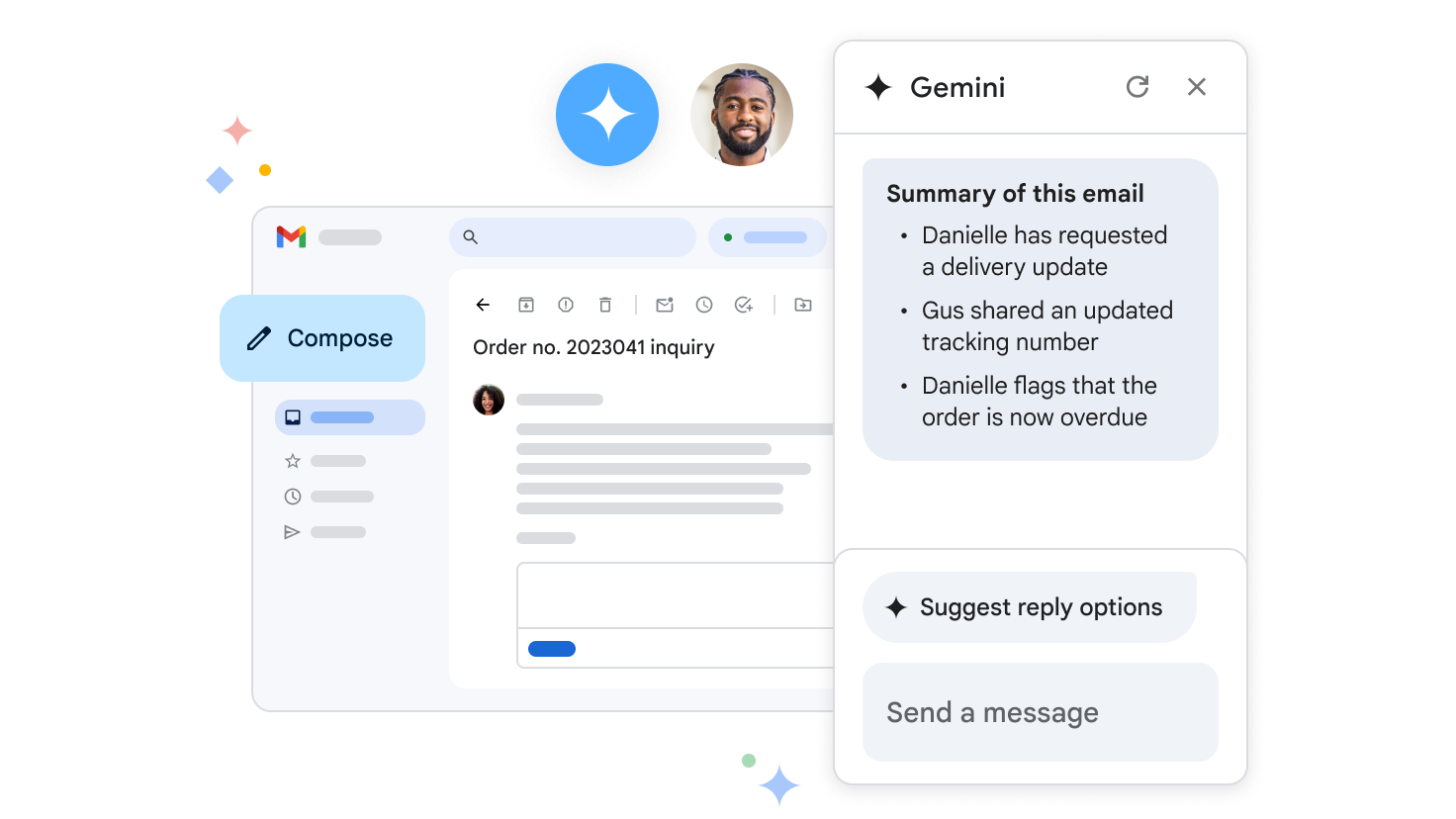
Instead of leaving the workspace environment, users access AI features within Gmail, Docs, Sheets, Slides, Meet, and more. That way, they don’t have the urge to take data to external tools.
Enterprise AI security is built into the architecture as Gemini is part of Google Workspace, meaning it enjoys all of its secure-by-default features. Besides, it doesn’t use prompts, responses, or virtually any type of content to train external models without explicit permission. Customer data remains within your organization’s controlled tenant.
Admins have granular visibility into how artificial intelligence interacts with company information. Key governance capabilities include:
- Data Regions, which allow organizations to restrict where data is stored and processed in order to meet residency and sovereignty requirements.
- Trust Rules, which prevent sensitive content from being shared outside defined organizational boundaries.
- Granular administrative controls that determine which departments or users can access specific AI features.
- Built-in protections against prompt injection attacks that help prevent malicious prompts from extracting sensitive information.
These capabilities allow you to safely deploy generative artificial intelligence within strict regulatory environments, including industries governed by HIPAA, GDPR, and FedRAMP frameworks.
For employees, the experience remains simple and has enterprise AI data privacy built in.
They can draft documents, summarize meetings, generate presentations, or analyze spreadsheets with a few prompts and without ever leaving the secure workspace environment.
GitLab: Duo for Secure Development
Software engineering teams were among the earliest adopters of GenAI.
Developers quickly realized that AI assistants could help debug code, generate functions, and explain unfamiliar frameworks.
Early adoption, however, created a major risk.
Many developers began copying proprietary code into public chatbots to get help solving programming problems. From a security perspective, this behavior was extremely dangerous.
Source code often contains confidential algorithms, credentials, internal APIs, and architectural details that attackers could exploit.
GitLab Duo was designed to solve this exact problem.
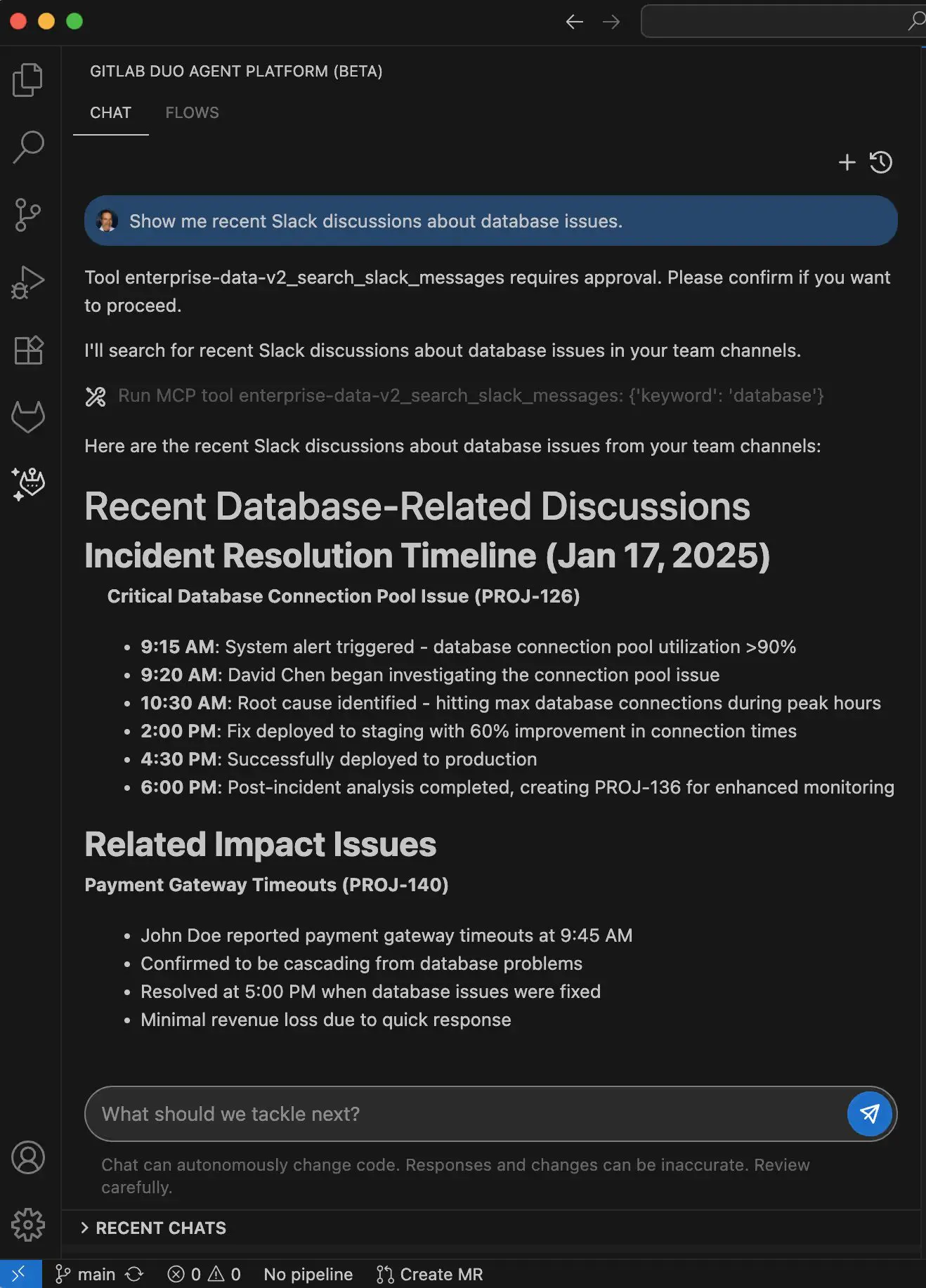
Instead of relying on external tools, your developers receive a secure AI coding assistant directly inside the GitLab platform. GitLab Duo integrates with your organization’s CI/CD pipeline, allowing artificial intelligence to assist throughout the entire software development lifecycle.
Capabilities include:
- Code suggestions and generation
- Vulnerability detection and remediation
- Security analysis during merge requests
- Automated documentation and planning
- Intelligent issue tracking and sprint planning
Because the system operates within the GitLab environment, proprietary source code never leaves the organization’s infrastructure.
This eliminates the data exposure risks associated with public assistants.
In early 2026, GitLab expanded these capabilities with the Duo Agent Platform. It now enables you to deploy AI agents that actively assist with development tasks.
These agents can analyze repositories, propose security fixes, and help coordinate development workflows.
Importantly, GitLab also supports self-hosted AI models, which allows you to run artificial intelligence workloads on private infrastructure or inside secure cloud environments.
For companies operating under strict compliance requirements, this level of control is a must.
| Dimension | Consumer Tools (Shadow AI) | Enterprise AI Security (Gemini, GitLab Duo) |
| Data Ownership | Data may be retained by the provider according to the Terms of Service. | Data remains the property of your organization. |
| Model Training | User inputs may be used to improve or train models. | Prompts and company data are not used to train external models. |
| Data Residency | Data location often unknown or globally distributed. | Administrators can enforce data regions and sovereignty requirements. |
| Access Control | Individual users manage their own accounts. No centralized governance. | Identity and Access Management (IAM) with role-based permissions and least-privilege controls. |
| Security Visibility | No organizational visibility into prompts, uploads, or outputs. | Full telemetry, logging, and monitoring of AI interactions. |
| Compliance | No enterprise compliance guarantees. | Designed to meet standards such as SOC 2, ISO 27001, HIPAA, GDPR, and FedRAMP. |
| Auditability | Limited or non-existent audit trails. | Complete audit logs for regulatory and internal investigations. |
| Integration with Enterprise Systems | Typically disconnected from internal workflows and systems. | Deep integration with productivity tools, cloud infrastructure, and CI/CD pipelines. |
| Protection Against Data Leakage | Employees may paste sensitive data directly into prompts. | Built-in Data Loss Prevention (DLP) and prompt filtering controls. |
| Prompt Injection Protection | Minimal protection against malicious prompts or extraction attacks. | Security layers designed to detect and block prompt injection attempts. |
| AI Governance | No centralized policy enforcement. | Organization-wide governance policies enforced by administrators. |
| Development Security | Developers often paste proprietary code into public tools. | Secure assistance inside protected repositories and pipelines. |
| Operational Control | Organizations depend entirely on third-party platform decisions. | Full administrative control over deployment, permissions, and usage. |
| Risk Exposure | High risk of data leaks, compliance violations, and Shadow AI spread. | Controlled environment with visibility, governance, and security monitoring. |
What Is AI Security? A Safe Starting Point
The only reason someone hesitates to go with enterprise AI is because they fear disruption.
Most of the time, leaders worry the move will slow down operations, overwhelm employees, or require large infrastructure changes.
A structured Security Audit removes those concerns, as the first step is visibility.
Our certified cybersecurity specialists analyze network traffic, application usage, and endpoint activity to spot unsanctioned tools already in use.
Many organizations are surprised by the results. Employees often rely on dozens of different artificial intelligence applications without formal approval.
The audit reveals where data may already be exposed and provides a clear starting point for governance improvements.
The bottom line is that AI is a helpful assistant and nothing to be afraid of. But it’s best to stick to tested corporate platforms that have passed specialized security checks and have a clean track record regarding AI incidents.
When employees have access to secure, powerful tools inside official systems, the incentive to use Shadow AI disappears.
Your organization gains visibility. Your employees gain productivity. And you, as part of leadership, gain confidence in the path forward.
Get Started with Enterprise AI Security Get a full-fledged AI security audit for your enterprise environment free of charge. No disruption. No risk to production systems. Apply Now →