

























Shadow IT: When What’s Hidden Becomes Advantageous
Wiz 21.07.2026 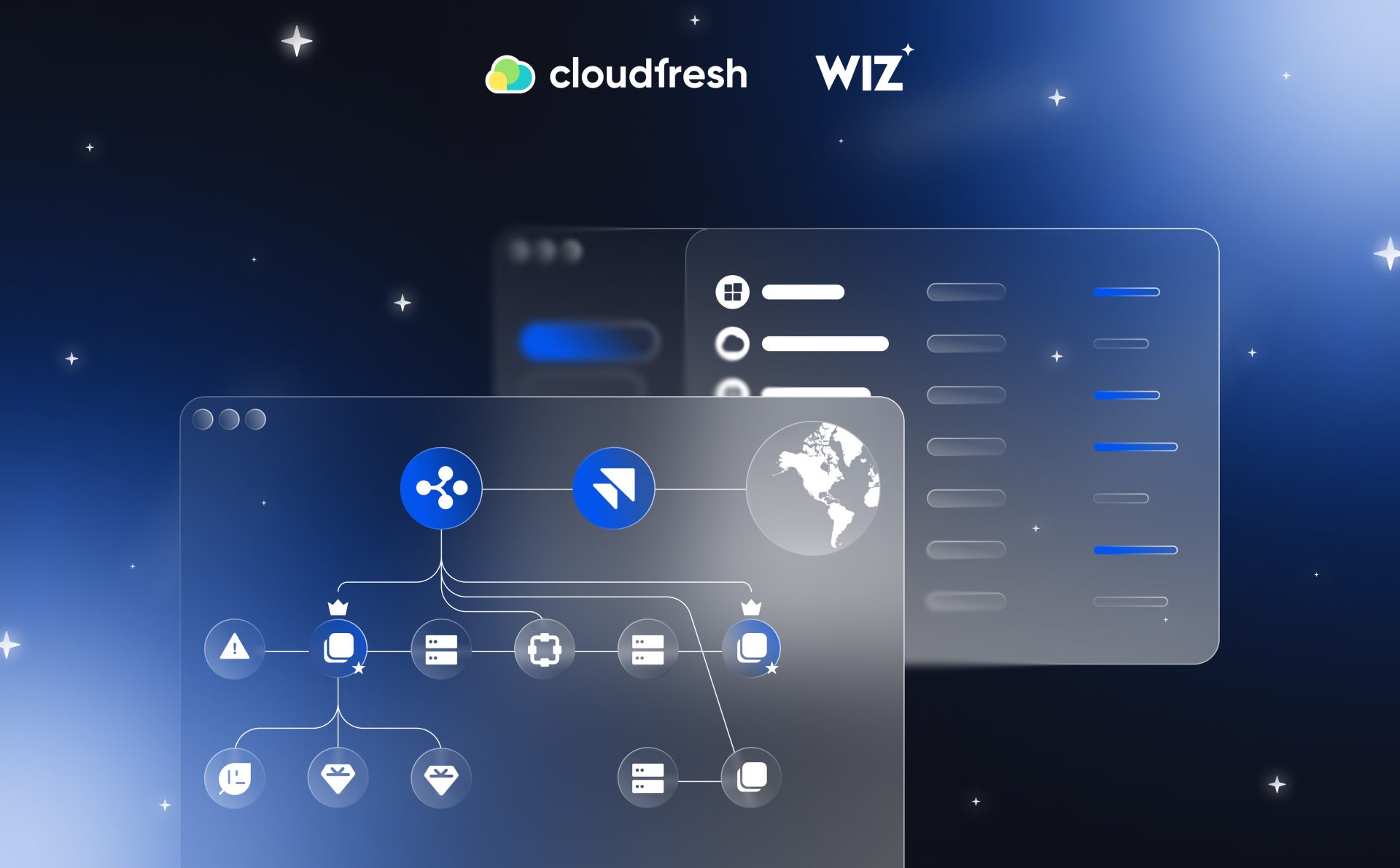

What Is Wiz CNAPP?
Most cloud security tools show you one slice of the picture. Wiz was built to show you all of it.
Wiz is a Cloud-Native Application Protection Platform (CNAPP): a single, graph-based view of risk across your entire cloud environment. Instead of stitching together outputs from five different tools, your team gets one platform that connects vulnerabilities, misconfigurations, exposed secrets, identity risks, and network paths into one prioritized picture.
What Does CNAPP Actually Mean?
CNAPP stands for Cloud-Native Application Protection Platform. Gartner coined the term for a new category that rolls up what used to take multiple point solutions to cover: cloud security posture management (CSPM), cloud workload protection (CWPP), infrastructure-as-code scanning, and more, all under one roof.
The problem CNAPP solves is real. As cloud environments grow, security teams end up juggling a fragmented stack: one tool scans containers, another handles posture management, a third catches exposed secrets. Each one produces its own alerts, its own severity scores, its own dashboard. That adds up to duplication and blind spots, especially when an attacker chains a few weak points together to get in.
CNAPP treats the cloud as one connected system, not a pile of separate parts. That shift matters, because attackers already think that way.
How Wiz Works: The Security Graph
At the core of Wiz sits what the company calls the Wiz Security Graph. Instead of scanning resources one by one, Wiz maps how they relate to each other: IAM roles, network exposure, workload vulnerabilities, data sensitivity, and runtime behavior, all overlaid on a graph.
That’s what lets the platform catch something a traditional scanner can’t: a toxic combination. A single misconfiguration might not matter much on its own. But put it on a workload with a critical CVE, connect that workload to a publicly exposed storage bucket holding sensitive data, and now you’ve got a real problem. Wiz surfaces that chain as a top-priority issue and pushes the thousands of lower-stakes alerts further down the queue.
According to Wiz, customers typically cut the critical findings they actually need to act on by over 90% compared to legacy tools. The risks haven’t disappeared. Context just clears out the clutter.
What Wiz Covers
Wiz runs across every major pillar enterprise cloud security needs.
Cloud Security Posture Management (CSPM) continuously catches misconfigurations across AWS, Azure, GCP, OCI, and Alibaba Cloud, and maps them against CIS benchmarks, SOC 2, ISO 27001, PCI DSS, HIPAA, and custom frameworks.
Cloud Workload Protection (CWPP) covers vulnerability assessment for VMs, containers, and serverless functions, with no agents required for that first layer of visibility.
Kubernetes Security Posture Management (KSPM) handles cluster configuration analysis, namespace-level risk detection, and admission control before workloads ever reach production.
Infrastructure as Code (IaC) Scanning brings security checks straight into the developer workflow, catching misconfigurations in Terraform, CloudFormation, and Bicep templates before anything gets deployed.
Data Security Posture Management (DSPM) finds and classifies sensitive data across your cloud datastores, then shows you who can reach it and how.
Cloud Detection and Response (CDR) covers runtime threat detection based on cloud logs, user behavior, and network activity, with automated response playbooks built in.
AI Security Posture Management (AI-SPM) is the newest piece. It maps risk across AI pipelines, model access controls, and training data exposure, which matters more every quarter as enterprises build out generative AI infrastructure.
Agentless by Default, Agent-Augmented When Needed
One of the biggest differences in how Wiz is built: agentless scanning. Wiz connects to your cloud environment through the API and reads snapshot data directly, no software to install on every host. That means your team gets full visibility across thousands of workloads within hours of onboarding, no deployment project, no coordinating with every engineering team along the way.
Need deeper runtime visibility, like process-level activity, network telemetry, or file integrity monitoring? Wiz supports optional sensor deployment for that too. The two modes work together: agentless coverage gives you breadth, and sensors give you depth exactly where you need it.
Who Uses Wiz?
Wiz is built for security engineers, cloud architects, and DevSecOps teams at mid-to-large enterprises running workloads across one or more major cloud providers. It’s especially useful for organizations that scaled fast in the cloud and now need to bring some structure to an environment that outgrew its own security controls.
Notable adopters include Salesforce, BMW, Slack, DocuSign, and Siemens, companies running complex, multi-cloud environments with regulatory requirements that demand provable control over their setup.
How Wiz Fits into a Cloud Security Program
Wiz isn’t a firewall, a WAF, or a network perimeter tool. It works inside the cloud control plane, reading configurations, correlating risks, and helping your team understand what’s exposed, what’s vulnerable, and what’s actively being targeted.
In practice, our team sees Wiz become the central risk intelligence layer. It’s where security teams start their morning triage, where engineering leads review IaC findings before deployment, and where compliance teams pull audit evidence without the manual grind. It plugs into Jira, Slack, ServiceNow, PagerDuty, and the major SIEM platforms, so findings land in your existing workflows instead of sitting in a separate portal nobody checks.
Is Wiz the Right Fit for Your Environment?
If your organization runs workloads on one or more hyperscale cloud providers, and your security team spends more time triaging alerts than fixing real problems, Wiz CNAPP goes straight at that. The platform is especially strong for teams that need to prove their compliance standing, cut down mean time to remediation, and get developers security context earlier in the build cycle.
We work with organizations at every stage of cloud maturity, from companies setting up their first formal cloud security program to enterprises consolidating a fragmented tool stack.
If you’re evaluating Wiz for your environment, Cloudfresh, as a certified Wiz partner, can walk you through architecture fit, licensing, and what onboarding actually looks like.
Ready to see what Wiz would surface in your cloud environment? Book a call with Cloudfresh and we'll help you run a scoped assessment. Let's talk →

FAQ
01 What's the difference between CNAPP and CSPM?
02 Does Wiz require agents on every server?
03 Which cloud providers does Wiz support?
04 How long does it take to deploy Wiz?
05 What compliance frameworks does Wiz support?