























- Understanding the Difference Between SASE vs. SSE

- How Do SSE vs. SASE Stack Up?
- Breaking Down the SSE Security Stack
- Inside the SASE Networking Engine
- How Companies Are Moving Toward SASE
- F.A.Q.




SASE vs. SSE: The Right Defense to Speed Up Your Operations
- Understanding the Difference Between SASE vs. SSE
- How Do SSE vs. SASE Stack Up?
- Breaking Down the SSE Security Stack
- Inside the SASE Networking Engine
- How Companies Are Moving Toward SASE
- F.A.Q.
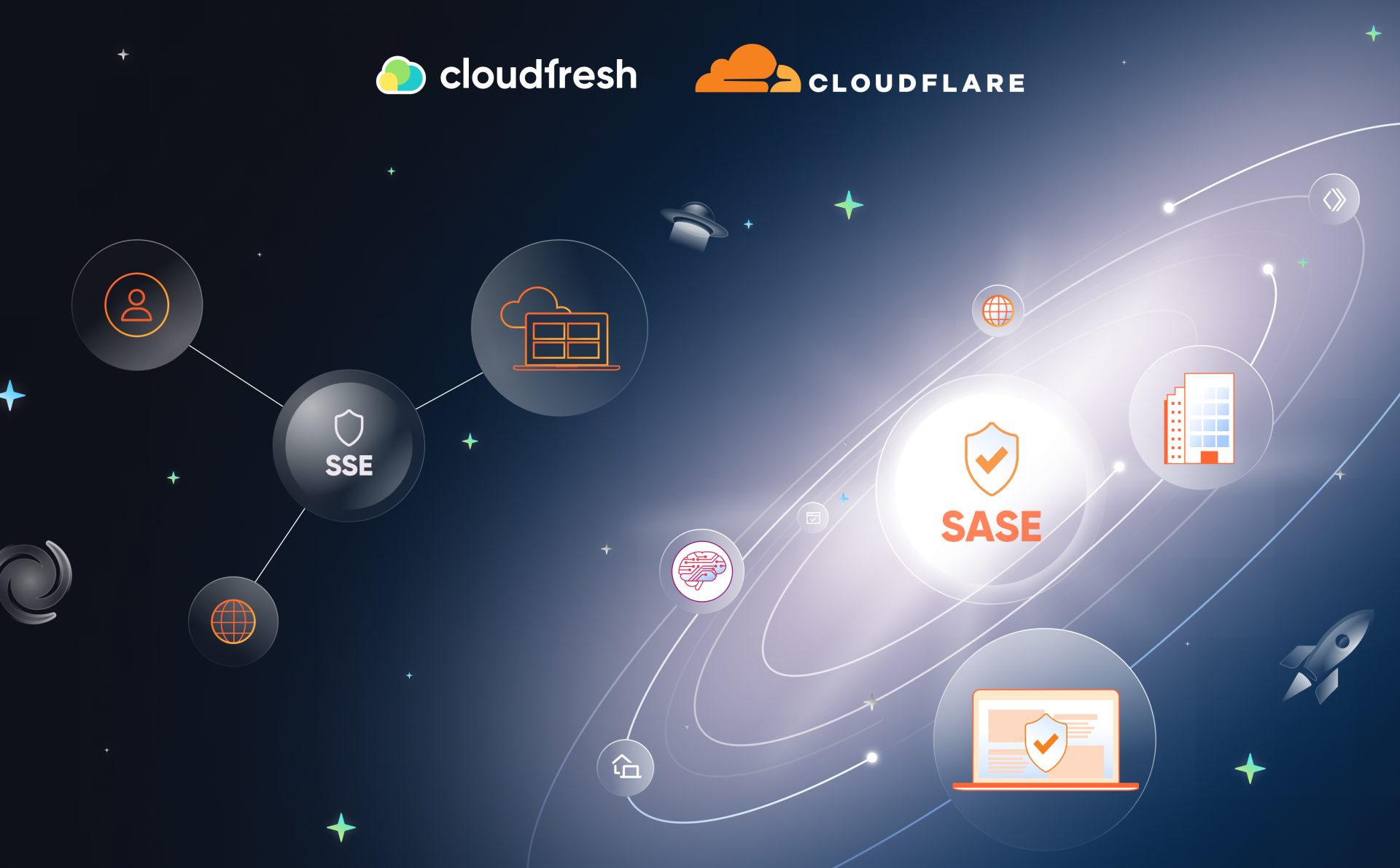
Think back a few years. Enterprise security felt pretty simple. If you sat safely inside the corporate network, the system trusted you. That classic castle-and-moat setup made perfect sense when your staff, your apps, and your data never left the office.
Then, the rules changed. For one, you moved your critical apps to the cloud. Two, your teams gained an opportunity to sign in from anywhere in the world. Almost overnight, the traditional network perimeter just… disappeared. All of a sudden, that automatic trust turned into a massive security liability.
To close the gap, businesses have started adopting Zero Trust. The concept here is pretty easy. Assume threats already live inside the house and verify every user, every device, and every request—including those coming from AI agents—over and over again, no matter where the connection starts.
But how do you actually roll that out across a business? There are two frameworks to make Zero Trust a reality—Secure Access Service Edge (SASE) and Security Service Edge (SSE).

Understanding the Difference Between SASE vs. SSE
People often use SASE and SSE interchangeably, but they are not the same thing. The main difference comes down to scope.
What Is Secure Access Service Edge (SASE)?
SASE is the complete package. It fuses modern network tech with Zero Trust security inside one single cloud platform.
It pairs advanced tools, like SD-WAN, with built-in security services. Instead of a setup that routes traffic back to a central data center for inspection, SASE pushes both network and security tasks to the cloud edge. This way, the system checks and protects traffic as close to the source as possible.
The main goal? To give your business secure, reliable, “any-to-any” connections between users, branch offices, cloud platforms, and apps, no matter where they sit.
What Is Security Service Edge (SSE)?
SSE represents just the security portion of the larger SASE model.
Unlike a full SASE rollout, SSE leaves the network architecture alone. It zeroes in strictly on security enforcement and access control.
For many companies, SSE acts as the perfect first step toward Zero Trust. It lets you fortify remote access and bring web threats to a low without a complete rip-and-replace of your entire WAN infrastructure.
How Do SSE vs. SASE Stack Up?
| Feature | Security Service Edge (SSE) | Secure Access Service Edge (SASE) |
| Scope | Focused on security enforcement | Combines networking and security into one architecture |
| Networking | Subset of SASE; relies on existing network infrastructure | Includes software-defined networking, SD-WAN, and traffic shaping |
| WAN Integration | Localized to cloud access security | Extends optimizations to the corporate Wide Area Network |
| Main Goal | Securing web, cloud, and private app access for remote workforces | Providing high-performance, secure “any-to-any” global connectivity |
Breaking Down the SSE Security Stack
Security Service Edge is something you can’t imagine modern-day enterprise defenses without. The architecture relies on three core technologies to carry the load, often supported by a few extra cloud-native tools.
- Zero Trust Network Access (ZTNA) retires the traditional VPN. Old VPNs expose massive chunks of your internal network to anyone with a valid password. ZTNA puts a secure boundary around private networks, self-hosted apps, SaaS, and non-web app/infrastructures (think of SSH and RDP), among other resources. Users only see the specific tools they actually need. In the meantime, your attack surface takes a massive cut.
- Secure Web Gateway (SWG) sits as a strict checkpoint between your team and the wild, open internet. It enforces your web policies, filters out toxic traffic, and stops your employees from a disastrous click on a malicious site before the damage even starts.
- Cloud Access Security Broker (CASB) protects your cloud apps and SaaS platforms and keeps a close eye on how your team uses these tools. CASB spots risky setups, hunts down hidden shadow IT, and flags unsafe file transfers.
Top-tier SSE platforms usually throw in a few extra layers of defense:
- Data Loss Prevention (DLP) guarantees your sensitive company data never makes an unauthorized exit out the back door.
- Remote Browser Isolation (RBI) opens suspicious websites safely inside an isolated cloud sandbox, miles away from the actual user device.
- Firewall-as-a-Service (FWaaS) scales your strict network traffic rules without a single piece of physical hardware.
- AI Usage Control governs which AI tools employees can use and lets you apply Zero Trust access policies to AI agents and MCP servers.

Inside the SASE Networking Engine
While SSE focuses on traffic protection, Secure Access Service Edge drops a full network framework right on top of those security controls.
SASE replaces expensive legacy MPLS circuits and heavy WAN architectures with a flexible WAN-as-a-Service (WANaaS) model.
The design follows a “light branch, heavy cloud” playbook. Branch offices need almost zero on-site hardware. Lightweight edge devices spin up secure connections over standard broadband internet. The cloud takes over all the complex work behind the scenes.
That workload includes traffic routes, packet inspection, high availability management, and Quality of Service (QoS) optimization. A move of these functions to the cloud hands your organization true flexibility and boosts performance across distributed setups.
How Companies Are Moving Toward SASE
At first, companies tried a DIY approach. They were stitching a SASE architecture together with mismatched products from different vendors. One provider tackled SD-WAN, and another managed the SSE services.
That strategy didn’t work out, though. Even worse, it caused completely new pain points. Traffic had to jump back and forth between platforms, and the constant transfer spiked latency and choked performance. Security policy management also turned into a total mess because IT teams had to work across entirely disconnected systems.
The market learned its lesson. Now, enterprises demand a single-vendor SASE model. In this setup, your network transport and Zero Trust security run through one unified platform. The system inspects data in a single pass to speed up performance and simplify your entire management console.
Most organizations refuse to flip the switch all at once. The rollout usually happens in targeted phases, driven by the immediate needs of specific internal teams.
- Security and IT (The SSE Path): These teams want to drop risk levels immediately. To do that, they deploy agent-based connectors to enforce strict Zero Trust and Secure Web Gateway policies from day one. This secures your remote workers right away, with zero wait for network teams to redesign local routers or overhaul current infrastructure.
- Networking (The WANaaS Path): Network engineers care about speed, absolute uptime, and simplified WAN control. Instead of going with rigid MPLS circuits, they deploy appliance-based connectors to automate cloud traffic routes. This WAN-as-a-Service approach bundles massive performance upgrades with built-in security.
- DevSecOps (The Mesh Path): DevSecOps teams lean on mesh and peer-to-peer network models for direct, secure service-to-service connections. These setups toss out the old VPN methods built for human users and adapt perfectly to cloud-native workloads.
To sum up, SASE now sets the absolute baseline for your entire enterprise strategy.
If you need a quick win, start with SSE. It drops a secure shield over your remote teams, branch offices, and cloud apps right away.
But the real payoff comes when you finally bring your entire setup together under SASE. You get faster connections, easier daily management, lower costs, and some serious resilience.
When you run this on a global Anycast network, your traffic routes and security checks happen in milliseconds. Meaning you get speed and safety at a massive scale.
Cloudflare One is built exactly for this. It’s a truly unified platform, and not a collection of acquired tools. ZTNA, SWG, RBI, DLP, and CASB all run through one policy engine on one global network, which directly lowers complexity and speeds up deployment.
Want to see how it fits your specific setup? Drop your details in the short form below to map out your next move as part of Cloudflare professional services.
Start with SSE, secure your users today, and grow into full SASE as your network evolves. What’s shifting fast right now is the AI dimension—every enterprise needs to decide which AI tools are sanctioned, prevent sensitive data from leaking into public models, and increasingly apply Zero Trust to AI agents themselves, not just human users.
Cloudflare One handles all of this from one platform—300+ cities, no backhaul, no compromise.”

F.A.Q.