

























How to Mitigate DDoS Attacks: Best Practices
- Cloudflare: Anycast Network, Cost Savings, and Developer-Friendly Tools

- Akamai: Purpose-Built Solutions
- Amazon CloudFront: Deep AWS Integration and Predictable Costs
- Features to Compare in CDN Providers: The Table
- How Much Do Top CDN Providers Cost?
- How to Choose among the Best CDN Providers: 7 Areas to Consider
Cloudflare 22.12.2025 


The Best CDN Providers, Compared: Cloudflare vs. Akamai vs. AWS CloudFront
- Cloudflare: Anycast Network, Cost Savings, and Developer-Friendly Tools
- Akamai: Purpose-Built Solutions
- Amazon CloudFront: Deep AWS Integration and Predictable Costs
- Features to Compare in CDN Providers: The Table
- How Much Do Top CDN Providers Cost?
- How to Choose among the Best CDN Providers: 7 Areas to Consider
Choosing the right Content Delivery Network (CDN) determines how fast your site loads, how well your apps stay protected, and how much you spend keeping everything online.
The top CDN providers like Cloudflare, Akamai, and Amazon CloudFront all deliver content around the world at high speeds, but each one takes a different approach to infrastructure, security, and pricing.
As a Select-tier Cloudflare Partner, we’ve decided to take a closer look at those approaches so you could make a well-informed decision for your organization.
Cloudflare: Anycast Network, Cost Savings, and Developer-Friendly Tools

Cloudflare is a global CDN built for businesses that want strong performance and reliable protection.
Architecture and Performance
The best CDN providers rely on powerful network architecture. Cloudflare runs one of the largest networks on the Internet, with more than 330 locations worldwide. Its Anycast routing feature is huge, meaning that every location announces the same IP address, so traffic flows to the closest data center with room to process it. This keeps content close to users, adds built-in redundancy, and spreads large DDoS attacks across many servers instead of one.
Cloudflare also runs every service on every server in every data center. That consistency helps keep latency low and uptime high. The company aims to serve content within about 50 milliseconds to roughly 95% of Internet users.
Caching and Optimization
Cloudflare’s caching approach focuses on serving as much content as possible from its own network, so fewer requests reach your origin.
- Tiered Cache: All plans include this feature. Some data centers act as upper tiers, so if content isn’t available at the first location a user hits, Cloudflare checks a nearby upper-tier node before going back to the origin. This boosts cache hit rates and cuts down on origin traffic.
- Cache Reserve: This add-on uses Cloudflare’s R2 storage to keep cached content for up to 30 days, even if the usual TTL expires, to reduce egress costs.
- Argo Smart Routing: An optional upgrade that analyzes real-time traffic patterns across Cloudflare’s network and sends requests through the fastest and most reliable paths. On average, it speeds up dynamic content by about 30%.
Security and Pricing
Cloudflare sits in front of your origin and filters all incoming traffic. It includes unmetered DDoS protection and a Web Application Firewall to block threats before they reach your server.
Its pricing is simple, with a Free plan for personal projects and monthly Pro and Business plans for more demanding needs. Cloudflare is also listed as a Leader in the 2024 IDC MarketScape for Worldwide Edge Delivery Services. Because so much content is served from its own edge, many customers see lower hosting bills and fewer origin requests.
Ready to Try an Enterprise-Level CDN from a Market Leader? Work with an official Cloudflare Partner in the Gulf Cooperation Council to make sure your serverless apps get to users all over the world in an instant, while our team helps you build and deploy for maxed-out speed and reliability. Start Your Project Now →

Akamai: Purpose-Built Solutions

The top CDN providers like Akamai are great at supporting demanding media workloads, enterprise apps, and API delivery. Many of its products come with strict SLAs to back that up.
Application and API Acceleration
Akamai offers several tools designed for specific delivery challenges, each tuned for speed and uptime.
- Ion boosts the performance of large, dynamic websites. It analyzes real-time signals like device type, network speed, and browser, then applies optimizations that cut down requests and shrink payloads. Ion includes a 100% availability SLA.
- API Acceleration focuses on API traffic, including XML and JSON. It improves reliability and offloads work from the origin by handling tasks such as authentication and certain serverless functions at the edge. It also carries a 100% availability SLA.
- Image & Video Manager fine-tunes images and videos on the fly. It applies dozens of transformations—rotating, resizing, color adjustments, etc.—and can detect faces to create smart crops. It aims to reduce file size while maintaining visual quality.
Traffic Management and Monitoring
Akamai also provides strong traffic control and detailed visibility across complex environments.
- Global Traffic Management (GTM) is a policy-driven load-balancing system that routes users to the best possible location based on current Internet conditions. It supports multi-cloud setups and delivers a 100% uptime SLA. It monitors servers across different data centers and applies traffic rules from one place.
- mPulse tracks how real visitors experience a site and ties performance to business results like conversions and revenue. It measures Core Web Vitals and offers “what-if” modeling to estimate the impact of changes.
- DataStream sends detailed data from Akamai’s edge—DNS, delivery, compute—to platforms like AWS S3, Splunk, and Datadog within minutes. It helps teams catch issues early and diagnose problems faster.
- CloudTest simulates real-world traffic. It can even test multiple CDNs at once to compare how each performs under stress.
Amazon CloudFront: Deep AWS Integration and Predictable Costs
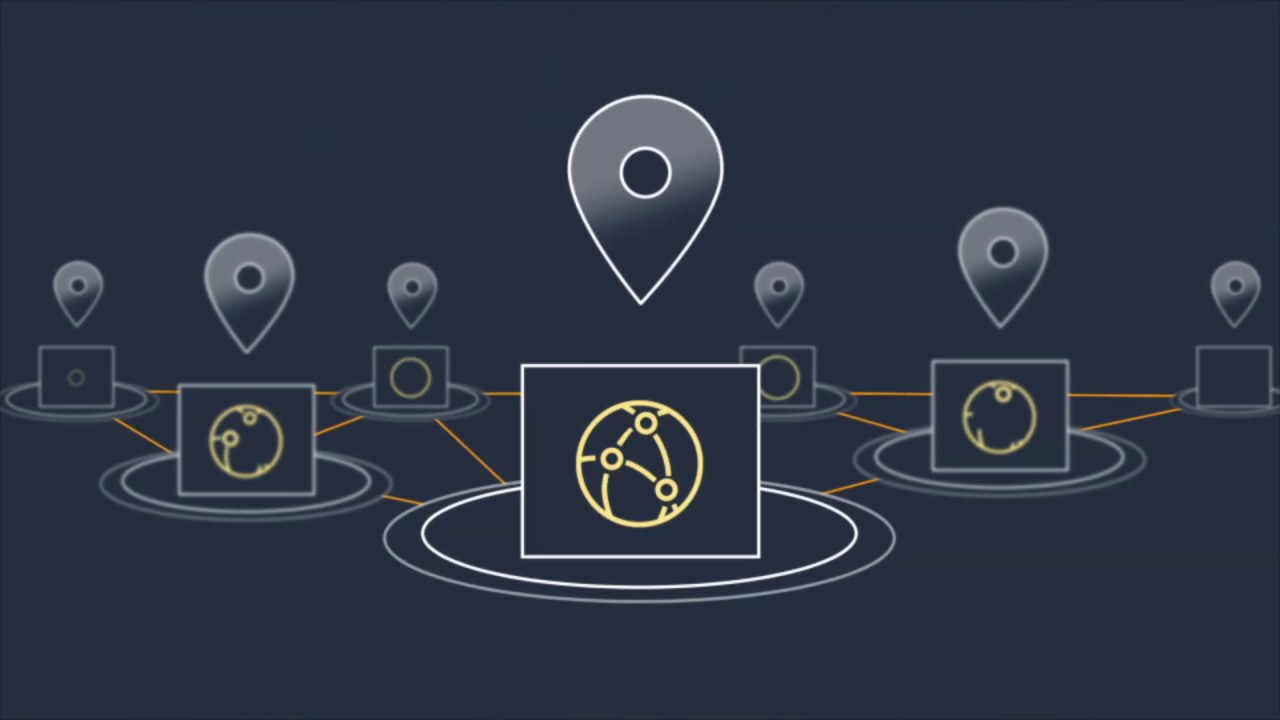
The list of the best CDN providers also includes Amazon, which builds on the reach of the AWS global network and offers tight integration with its security and compute services. It also provides flexible pricing options that make it easier to keep costs under control.
Global Reach and Availability
CloudFront serves content through more than 750 Points of Presence in over 100 cities and 50+ countries. It’s also backed by more than a thousand embedded POPs. All of this runs on the AWS backbone, which uses multiple parallel 400GbE fiber connections to maintain low latency and strong reliability.
The platform includes several layers that reduce pressure on the origin:
- Regional Edge Caches (RECs) sit between AWS Regions and the edge PoPs. They help bring down the number of repeated origin requests, which can improve performance and lower operational costs.
- Origin Shield boosts cache hit rates across regions. In many cases, CloudFront makes only one origin request per object.
- Origin Failover automatically shifts traffic to a backup origin if the primary one goes down.
Security and Edge Compute
The CDN provider works closely with AWS security tools such as Shield, WAF, and Route 53 to form a layered cybersecurity defense against DDoS attacks and other threats. It supports HTTPS with TLS 1.3, and AWS Certificate Manager provides free certificates with automatic renewal.
For compute at the edge, it offers two serverless options:
- CloudFront Functions are great when every millisecond counts. These tasks include, for example, URL rewrites, redirects, header updates, and cache-key adjustments.
- Lambda@Edge, in turn, is better for heavier workloads that require more time, outside dependencies, or deeper integration with AWS services like S3 or DynamoDB.
Pricing
CloudFront gives customers several ways to manage costs:
- Flat-rate pricing plans bundle the core platform with services like AWS WAF, DDoS protection, Route 53 DNS, TLS certificates, logging, and edge compute. Everything is included in one monthly price with no overage fees, which helps prevent surprises during traffic spikes or attacks.
- Pay-as-you-go charges are based on actual usage for each service.
- Data transferred from AWS origins—such as S3 or EC2—to edge locations incurs no additional charge.
Features to Compare in CDN Providers: The Table
| Category to Analyze Best CDN Providers | Cloudflare | Akamai | Amazon CloudFront |
| Primary Architecture | Anycast routing; every service on every server. | Global Edge Platform; GTM uses real-time Internet conditions for routing. | AWS Global Network backbone; 400GbE parallel fibers. |
| Global Scale | 125+ countries. | 130+ countries. | 50+ countries. |
| Advanced Caching | Tiered Cache (standard feature), Cache Reserve (30-day object storage). | Cloud Wrapper (efficient caching layer to improve origin offload). | Origin Shield (centralized caching layer to maximize cache hit ratios). |
| Edge Compute | EdgeWorkers (JavaScript), Workers AI. | EdgeWorkers (Custom JavaScript), FaaS (via Fermyon acquisition). | CloudFront Functions (low-latency, <1ms ops), Lambda@Edge (complex ops). |
| Specialized Services | Argo Smart Routing, China Network. | Ion (web optimization), API Acceleration, Image & Video Manager. | SaaS Manager (multi-tenant app management). |
| Monitoring/Testing | Real-time logging. | Real User Monitoring, low-latency log feed, CDN-independent load testing. | CloudWatch metrics, standard and real-time logging (via Kinesis Data Streams). |
| SLA/Uptime | 100% Uptime SLA for certain plans. | 100% availability SLA for Ion, API Acceleration, and GTM. | Uptime SLA included with Business/Premium flat-rate plans. |
| Pricing Model | Tiered monthly plans (Free, Pro, Business). Lower egress fees due to R2 storage. | Not explicitly detailed. | Flat-rate bundled plans (no overage charges), or Pay-as-you-go. Zero charge for origin data transfer from AWS services. |
How Much Do Top CDN Providers Cost?
Both Cloudflare and Amazon CloudFront offer tiered pricing structures, while Akamai generally details free trials or encourages contact for specific quotes.
Amazon CloudFront Pricing
Amazon CloudFront offers flat-rate plans that bundle the CDN service with other AWS features (like WAF, DDoS protection, DNS, logging, and S3 storage credits) for a monthly price with no overage charges.
| Plan | Monthly Price | Includes | Usage Allowance Highlights |
| Free | $0/month | CDN, DNS, Always-On DDoS Protection. | 1M Requests, 100GB Data Transfer. |
| Pro | $15/month | Adds WAF (5 rules), Logging. | 10M Requests, 50TB Data Transfer. |
| Business | $200/month | Adds Advanced DDoS Protection, Uptime SLA, Origin Failover. | 125M Requests, 50TB Data Transfer. |
| Premium | $1,000/month | Adds Origin Load Reduction, High-Speed Origin Routing. | 500M Requests, 50TB Data Transfer. |
| Custom | Custom pricing | For scaling and protecting mission-critical applications. | No limit on Requests or Data Transfer. |
Alternatively, CloudFront offers pay-as-you-go pricing, where you are billed separately for each service based on actual usage. Discounts are also available via its Security Savings Bundle or custom pricing for high-volume commitments (typically 10 TB/month or higher).
Cloudflare CDN Pricing
Cloudflare also uses tiered, flat-rate pricing based on monthly or annual billing.
| Plan | Monthly Price (Annual Billing) | Target User | Key Features |
| Free | $0 forever | Personal or hobby projects. | CDN, Universal SSL, Unmetered DDoS Protection. |
| Pro | $20/month | Professional websites. | 100% uptime SLA, lossless image optimization, easy-to-detect bot mitigation. |
| Business | $200/month | Small businesses operating online. | Sophisticated bot mitigation and basic bot analytics. |
| Contract | Custom pricing | Mission-critical applications. | Includes all bots, anomaly detection, advanced bot analytics, and 24x7x365 support. |
Akamai Pricing
Akamai’s documentation heavily promotes free trials for various solutions, but does not list standard monthly or annual price tiers like AWS and Cloudflare:
- API Acceleration: Available for a free trial.
- Ion (Web Performance): Free 30-day trial with a 15 TB traffic allowance.
- mPulse Lite (Real User Monitoring): Free 30-day trial, including 1 million beacons per month.
- Global Traffic Management (GTM): Available for a free 30-day test run.
How to Choose among the Best CDN Providers: 7 Areas to Consider
When you’re evaluating features to compare in CDN providers, it helps to look past raw speed. The real difference shows up in how each provider deals with complex traffic, integrates with your stack, and keeps operations smooth. That being said, you’re more than welcome to use the categories below as a guide!
Area #1. Global Scale and Network Architecture
A CDN’s reach and design impact both performance and reliability.
- How many edge locations does the provider have, and do they line up with where your users live? For example, Cloudflare has 125+ locations, while CloudFront lists more than 50.
- Does the CDN use Anycast, which routes traffic to the closest capable location and spreads out DDoS attacks? Or does it rely on DNS-based routing, which can be influenced by DNS TTLs and resolver locations rather than true client proximity?
- Does the provider use its own high-capacity private backbone—like AWS’s multi-fiber network—to move traffic and reduce reliance on the public Internet?
Area #2. Caching Strategy and Origin Protection
Caching is a CDN’s core job, and a strong strategy can cut costs and protect the origin.
- Look for multi-layer caches such as Cloudflare’s Tiered Cache or CloudFront’s Regional Edge Caches to improve hit rates before requests reach the origin.
- Some CDNs offer features to collapse duplicate requests—CloudFront Origin Shield and Akamai Cloud Wrapper are two examples.
- Tools like Cloudflare’s Cache Reserve give you a place to store infrequently accessed content for longer periods, which can help reduce egress fees from cloud providers.
Area #3. Edge Compute
Key for modern apps, running logic at the edge is one of the most important features to compare in CDN providers.
- Some platforms include lightweight, low-latency options—such as CloudFront Functions—alongside more powerful environments like Cloudflare Workers or Lambda@Edge.
- Check whether edge functions can access distributed key-value stores, such as EdgeKV or CloudFront’s KeyValueStore, without hitting your origin.
Area #4. Application and Content Specialization
If you serve heavy media or API-driven apps, specialized tools can make a big difference.
- Look for purpose-built acceleration for transactional traffic, such as API or dynamic workloads.
- Some CDNs offer automated image and video transformations, including responsive resizing and smart cropping.
Area #5. Observability and Testing
Understanding how real users experience your site—and how your system behaves under pressure—is essential.
- Some platforms tie performance metrics to business outcomes to help you understand what users actually feel.
- Check how quickly you can get logs and where you can send them.
- Check if a service in question lets you simulate peak traffic, possibly across multiple CDNs, so you can spot weak points before they cause trouble.
Area #6. Security and Compliance
A CDN sits at the edge and should act as your first layer of defense.
- Look at how DDoS protection and web firewalls are bundled or integrated, for example, CloudFront’s use of AWS Shield and AWS WAF, or Cloudflare’s unmetered DDoS protection.
- It really helps when the CDN creates, manages, and renews SSL/TLS certificates for you at no extra charge.
Area #7. Pricing and Cost Predictability
Choose a model that fits your budgeting goals and your traffic patterns.
- Some teams want a predictable monthly price with no overage fees; others prefer pay-as-you-go.
- If your origin lives inside a major cloud provider, check whether the CDN waives data transfer costs. CloudFront, for example, doesn’t charge for transfers from AWS origins to its edge locations.
If you’re ready to put this blueprint to practical use and enjoy all the benefits of one of the best CDN providers out there, feel free to fill out the short form below.

Get in touch with Сloudfresh